

Doctors warned Fanny that it was dangerous for her to have children. She was small and Fred was a hunk of a man. An article on May 1, 1904, in the Minneapolis Tribune, described Fred as “a splendid specimen of physical manhood and a trained athlete.” (Queen of Montana Beach, p. 69).

But Fanny was determined, spunky and convinced that she would illustrate children even better if she had some of her own. And she did. Agnes Sayre Cooney was born to Fred and Fanny in 1907. She was called Sayre, because it was too painful for Fanny to call her Agnes. Later, the family was joined by brothers Bob and Ted. Their world of delights was the ranch: playing cowboys and Indians, riding horses, swimming in the lake, hiking Avalanche Gulch. The boys helped the ranch hands with the outdoor chores, Sayre helped her mother.

Fanny with Bob, Ted, and Sayre.
Fanny, kept the small ranch home neat and humming with industry. Fred stoked the fire, Fanny made breakfast. Water was hauled in from the well, vegetables grown in the garden, berries picked and made into jellies and jams. There was canning for the winter, and clothes to be sewn and washed on a scrubbing board under the Cottonwood tree near the old stone well. Flowers picked and bouquets arranged, and sometimes Fanny and Sayre spotted fairies in the flowers. Vines wrapped the house beautifully, and kerosene lamps flickered through the windows as Meetsy read stories to the children at night.

Though Fanny left school in the eighth grade, she was a great lover of books. She claimed to have read all the books in the Helena library by the time she was eighteen. School was important to Fanny. For a while, Fred and Fanny hired teachers to live on the ranch and instruct the children. Then they went in with neighbors to build a simple schoolhouse where nearby children attended. Later, during the winters Meetsy moved with the kids to Canyon Ferry to ensure their schooling while Fred, or “Popsie” as he was called, stayed on the ranch and fended for himself. Sayre remembers at Canyon Ferry her mother had the children lay out their clothes before they went to bed in the case the dam broke and they had to get away. And for a while Fanny and the kids lived across from Popsie’s mom and spinster sisters in Helena. Fanny’s determination paid off. Sayre, who loved books like her mother, worked at the library in Helena and graduated from Nursing School. Bob became a doctor winning acclaim during WWII. Ted became a respected Montana Forest Service leader; they all graduated from college.

Fanny on hammock at the ranch
Fanny wasn’t all about work and school. She could have fun too. She planned picnics with the neighbors and kids up Avalanche Gulch. The kids called themselves “the gang” and spent hours adventuring with other ranch kids, swimming on Lake Sewell, where Sayre learned the breast stroke “looking like a Queen of the sea” her daughter Ann remembers. There was fishing and canoeing at the lake and skating on the ice in winter. Fanny made the home warm, full of love and laughter and light. Fred was more stoic and silent and stern. Sayre didn’t feel close to her dad, until she had a daughter of her own. When Margaret was born, they had someone they both could love. Meetsy, on the other hand, Sayre adored.

Sayre’s sketch of her daughter, Margaret.

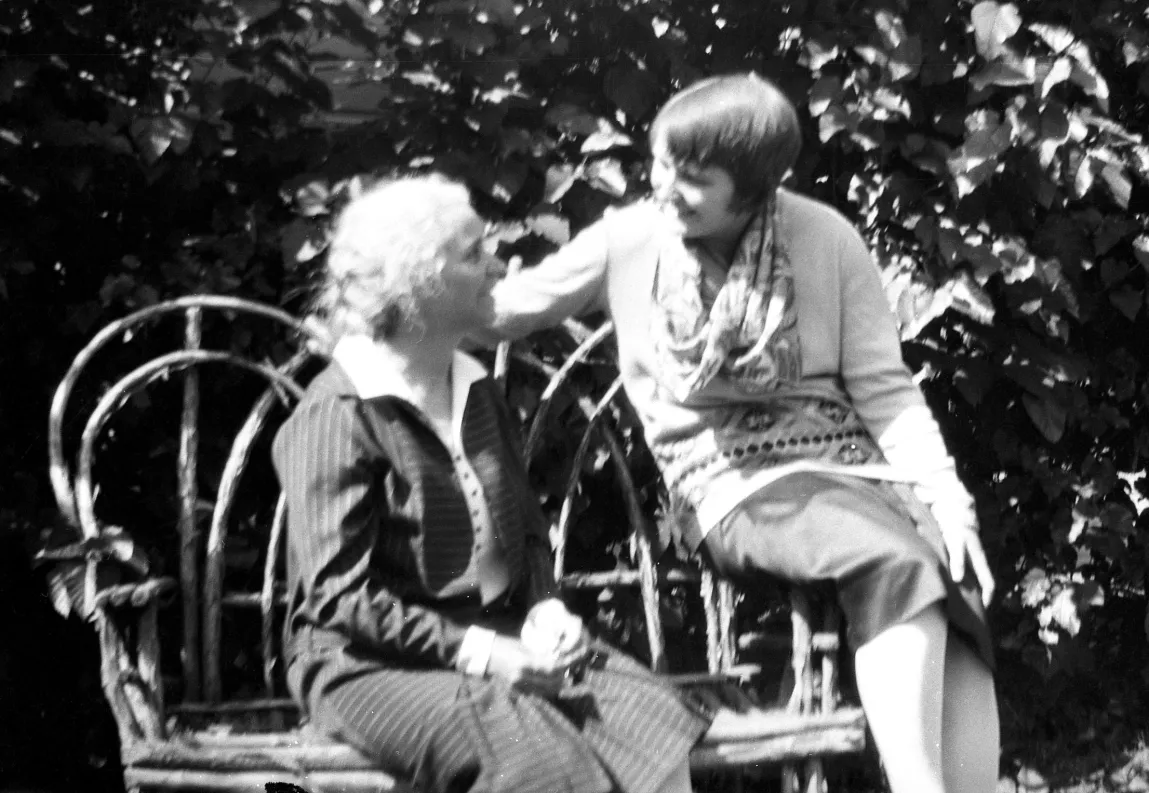
Fanny with Margaret in her garden.
Fanny threw herself into mothering. When it came time to put them through college, she had lost her place to other talented illustrators. Encouraged by her brother Jack to consider cartooning, Fanny spun her wit and whimsy in a cartoon about a five-year old boy named Sonny. Launched in 1925, Fanny’s popular Sonnysayings ran daily until her retirement in 1956. In 1935, she was hired by King Features Syndicate for a second strip, Little Miss Muffet, to compete with the popular Little Orphan Annie by Harold Gray. For her exploits, Fanny, who went by her maiden name, Fanny Y. Cory, was dubbed the “First lady of the Funny Papers”.

Fanny saw Sayre’s artistic talent and encouraged her to draw. She dreamed Sayre would go to art school, and, in 1929, this dream came true. Fanny accompanied twenty-two year old Sayre, from Montana to the prestigious Pennsylvania Academy of the Fine Arts. Sayre completed several years of training there. At that time, modern art was admired at the Academy and traditional art was seen as lesser. Since Sayre’s talents lay in being able to artistically render any subject she saw, she didn’t feel at home at art school nor was she an illustrator artist like her mother who could make things come alive from her imagination; Sayre needed to see what she was drawing.


The first drawing is of the cow Pussywillow by Sayre when she was 12. The others are drawings and oils by Sayre’s from art school
Sayre’s brother Bob, finding it impossible to not compare his sister’s art with that of their mother’s, said, “Sayre, you have talent, but not genius.”

Sayre at art school
During this time of uncertainty in her life, Sayre read a book about Hull House in Chicago where Jane Addams made a huge impact on the needs of people there. She decided she wanted to do something with her life where she was helping people. Sayre chose to become a nurse. The day she graduated from nursing school, she married a medical doctor, Thomas Dodgson and they began a new life together.


Sayre, helping Doc with nursing; and Doc and Sayre together in middle age.
Sunnyshore Studio invites you to celebrate Ann’s 80th birthday with a party on Saturday, May 23rd. The party takes place at Sunnyshore Studion (2803 SE Camano Drive, on Camano Island) and showcases, besides the birthday girl, a retrospective of Ann’s art, her life and loves through the years. It is a stunning tour de force that you won’t want to miss.
