
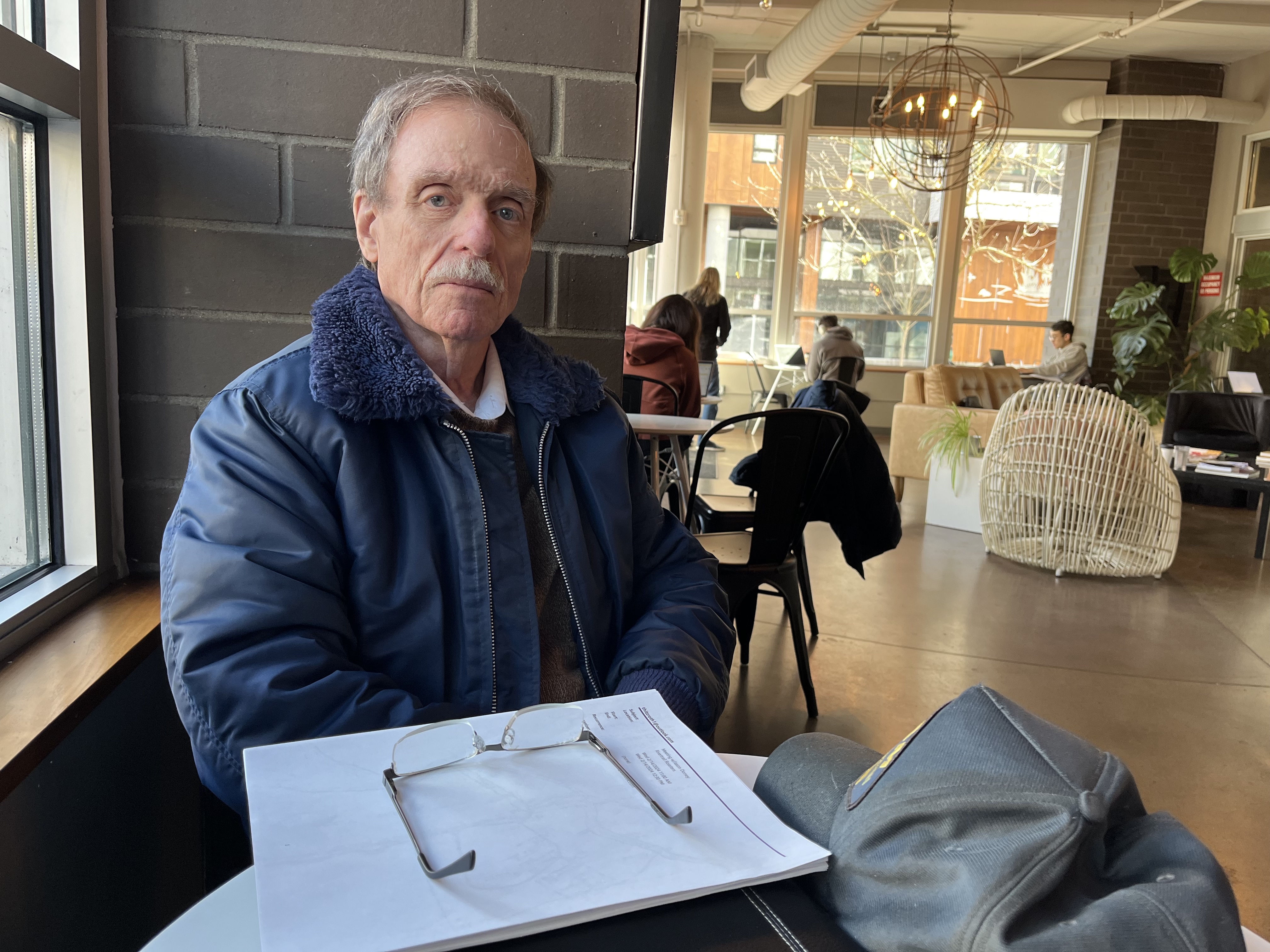

Tom Hitzroth, history, and the Story of Marymoor Park
Tom got his start as a local historian in 1991 when he was with the board of the Marymoor Museum in the north wing of Clise house in 1991. For Tom the value of history is to learn how someone else has lived. Even if a person only lives for a few years in Redmond, they should still be curious about how people here dealt with their life situations. How did they live? What was their culture like? What were their thoughts and feelings like? By studying history, a kind of cross pollination of cultures happens. Sharing history matters to Tom. Newcomers to Redmond want to learn the town’s history: where did it come from? What was it like? Tom has led walking tours of the downtown for twenty years. He’s something of an expert on the experimental farm that current residents know as Marymoor Park. Before it was Marymoor, it was Willowmoor, named by its first owner James W. Clise.

Willowmoor Farm
James W. Clise came to Washington in 1889, right after the fire in Seattle and was a business man in Seattle almost until the time he died in 1938. He went into real estate, formed Clise Investment Property, led the Chamber of Commerce of Seattle for many years and helped create the Alaska Yukon Exposition, the only thing left of that is the Frost Pond on the University of Washington campus. Among his investments was 320 acres at the headwaters of the Sammamish River purchased from Adam and John Tosh, who owned it through the Homestead Act[1] and who had built one of the first bridges over the Sammamish. Later Clise added more land; eventually Willowmoor totaled 480 Acres.
Clise built the experimental farm from scratch. He was experimenting all the time with different ways of growing things. He raised and bred Ayrshire cattle, chickens and Morgan horses. He named the farm Willowmoor from the willows on the river. The Clise family moved from Queen Anne Hill to the farm in 1907 and owned the property until 1921.
What is now called the Clise Mansion at Marymoor Park started out as a hunting lodge. Buildings and barns sprang up. Just north of the house was a small building for laundry, another housed the library. Beyond these was a residence for the workers. Northeast of the home was a creamery, where the processing of the milk happened. Just west of the creamery, towards the home was a four-car garage. South of the garage was the power house, where a acetalize was made for use on the farm, as well as where the gas was stored. Nearby was a tool shed. East of the tool shed was a dove cote where pigeons and different kind of fowl for table were kept. Just east of the home were four greenhouses, fifteen feet wide and a hundred feet long, for use by his wife Anna. They stood there till 1942. Eventually an art gallery off the north wing was built that was eighteen feet wide and thirty-eight feet long and where many parties were thrown. Towards the river was a two-story gatehouse, where the gatekeeper and his wife lived. There was a boathouse and a windmill, which still stands today. A cistern west of the river went under the road and by the windmill. They drew water from it at many places for their many operations. There was a cow barn, horse barn, bull barn and a hay barn, many chicken coops, and a large building for farm machinery/implements. There was a also a goose pond, duck pond and, for good measure, a sun dial. Tom Hitzroth says there were twenty to twenty-five people employed on the farm.

From Willowmoor to Northwood to Marymoor
Willowmoor was bought in 1921 by John Bratnober, Vice President of the Allen and Nelson Mill Company, as an investment property. Like Clise, he raised show cattle. The farm was overseen by his son. During this period, the farm was called “Northwood.” Hitzroth says, “we have no idea why.” The next owner was Uberto M Dickey, the founder of Darigold, In 1941, he learned the property was for sale through Walter Nettleton. Walter Nettleton arranged for Dickey and Bratnober to meet. He got Dickey and Bratnober together, and Dickey purchased the property from Bratnober for $56,000. Dickey leased the
Dickey leased the property to Walter Nettleton, a lumberman for six hundred dollars a month. Walter Nettleton maned the property Marymoor after his daughter Mary Nettleton.
Dickey owned it till 1959. He sold it to Rex Allison and Lauren Lean, the president of the board and chairman of Bon Marche, for $500,000. They wanted to turn the area into a Northgate. Around that same time, local residents expressed that this area would be ideal for a park and Marymoor lent itself a natural park environment. In 1962 King County began negotiating with Allison and Lean. In 1962, King County bought the property from Allison and Lean. Hitzroth notes five distinct periods for the farm corresponding to the owner: (1) Clise Period 1904 – 1921, (2) Bratnober Period 1921 – 1941, (3) Dickey/McVay Period 1941 – 1959, (4) Allison and Lean Period 1959 – 1962, and (5) King County 1962 to Present.


The Sammamish River Flows and History Flows on Too
Today the flow of the Sammamish is largely the same as it is today. We know this because in 1906 we have soundings that go from the Tosh Bridge to the Clise Bridge to the Leary Way Bridge. In 1906 the flow of the river was 143 cubic feet per second. That’s slower than a person walking. The Tosh and Clise bridges were private bridges, bearing the name of those early owners, no longer stand. But they served their purpose in their time, like todays bridges do. Most of the buildings are gone too. Much of the history of these places would be forgotten if it were not for men like Tom Hitzroth who care about history, who carefully investigate it, and who keep it for the generations to come. I am thankful to learn the history of the Clise farm. One of my dad, Jack Dorsey’s best friends is Rich Clise. And I’m thankful for Marymoor Park. Three or four times a week, I take my dog Brody to the Dog Park there. He swims in the river. Marymoor Park and Willowmoor Farm are a treasure for Redmond residents and they are more meaningful when you know.

[1] Adam and John Tosh owned their properties through original land claims. He uses the term “land claim,” to distinguish between the two separate laws going on at that time. There was the Land Act of 1820, which was later supplemented by the Preemption Act of 1841.The Land Act of 1820 allowed for the purchase of 80 acres of land at $1.25 per acre but you had to pay the full amount up front. This didn’t work so well. In 1841, the Preemption Act was passed and it allowed the purchaser to pay 20% per year for five years. The Homestead Act of 1862 allowed the claimant to obtain up to 160 acres by paying a registration fee and then the claimant had five years to make improvements. In both laws after five years the claimant had two years to make the final filing with the government to take possession of the land.